
JCI Tai Ping Shan



Background
Junior Chamber International Tai Ping Shan is a non-profit organization (IRD: 91/1924), founded in 1978 as a local chapter of Junior Chamber International. Ever since the chapter has positioned itself as a platform for initiation of events and projects aiming at creating positive impacts to members and the Hong Kong society. Our chapter is the first JCI organization to establish cooperation with youth organizations in Mainland China for the promotion of cross boarder business and services relationship. We had successfully organized many noteworthy and award winning projects with significant impact the community including "Love & Dream Bird - Employment Opportunity for People with Disability".
Projects
- Challenge Minds Together
Events Overview
As Hong Kong ages, dementia becomes a harder challenge.

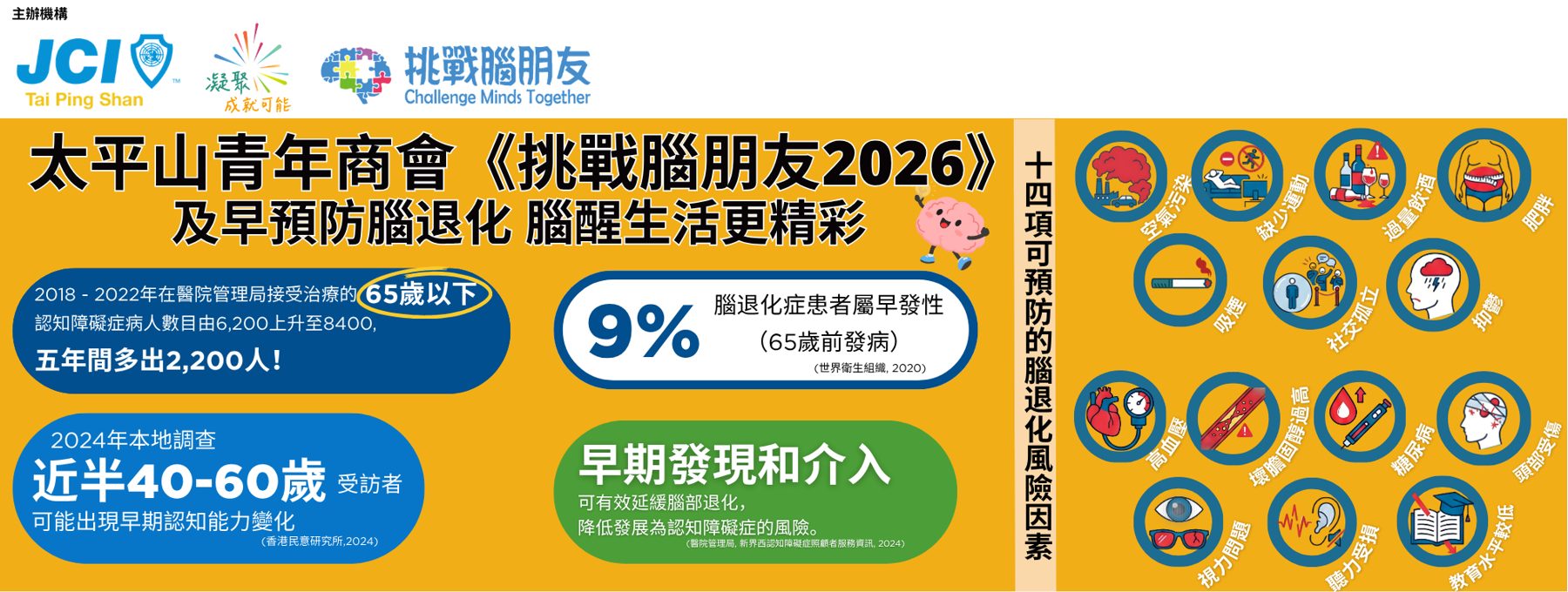
Research in The Lancet notes that changes in the brain can begin 20 years before clear symptoms, and that up to 45 per cent of cases worldwide could be prevented or delayed by acting on 14 lifestyle risks, including exercise and blood pressure.
The years from 30 to 65 are the golden time to prevent cognitive decline.
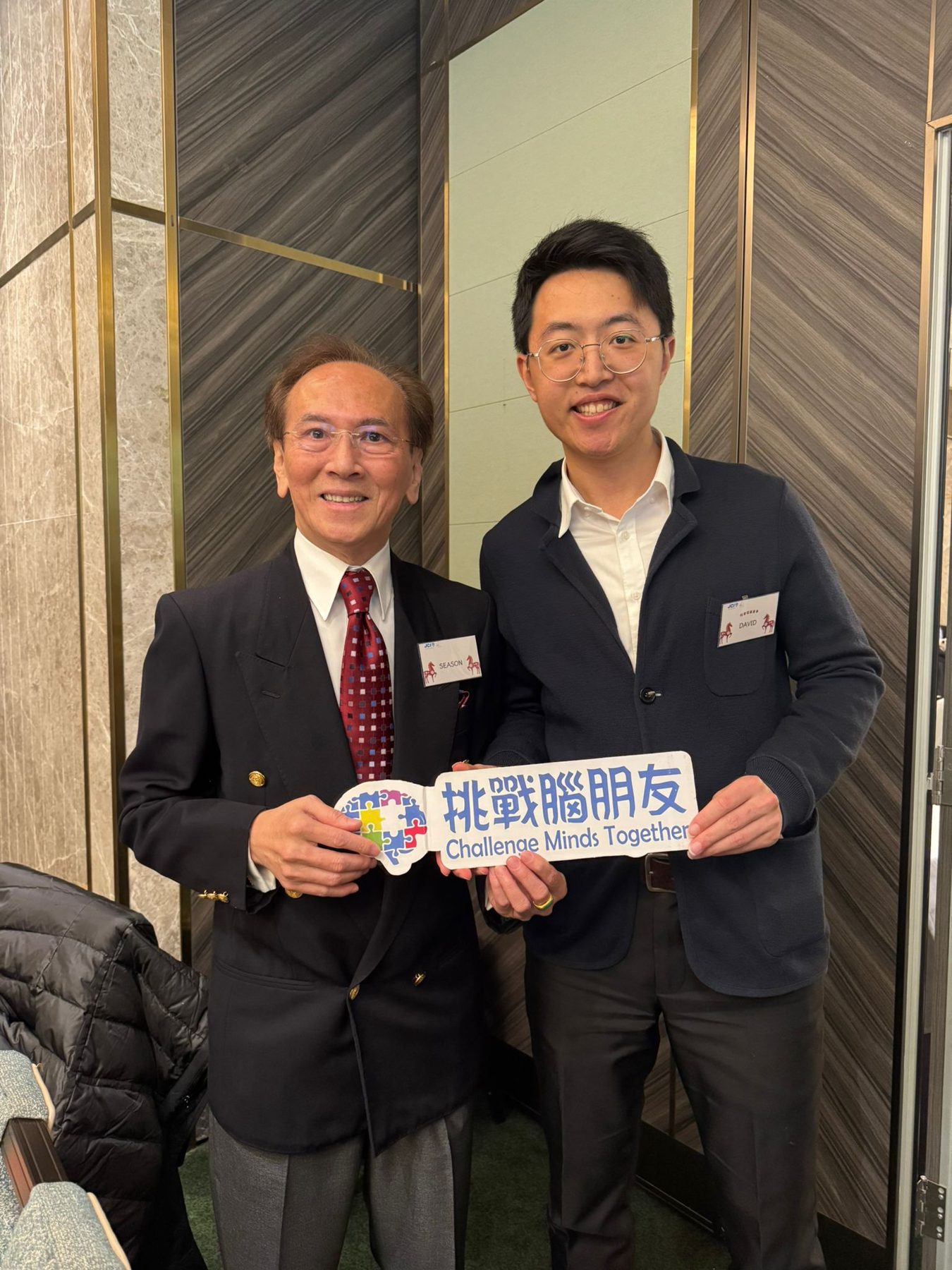
JCI Tai Ping Shan has therefore launched 「挑戰腦朋友2026」, the first territory-wide brain-health risk survey of its kind, with specialists from the Faculty of Medicine at The Chinese University of Hong Kong.

It works on those 14 reversible risks and on public awareness.
The project answers Sustainable Development Goal 3, good health and well-being, and Goal 4, quality education. Early screening and action should lower incidence and, over time, ease the burden of care.
From March to July a public survey takes three minutes and immediately estimates a person’s brain-health risk over the next 20 years, with prevention advice aimed at that person. From June to August a new non-invasive method reads a fundus photograph with AI, detecting Alzheimer’s risk at an accuracy of more than 80 per cent. Expert talks from April to July teach people how to protect the brain. On 19 July, 「世界腦健康日」, a new 「社區服務日」 and results briefing will use booths and a press conference to put daily brain care into practice.
The project fills a gap in local brain-health data and turns medical knowledge into action. With specialists, public figures, district councillors, Care Teams and companies, it aims to reach more than 2,500 people and to build a Hong Kong that looks after the brain.
「挑戰腦朋友2026」 flagship project
Besides the brain-health community talks and other activities from March to May, 「挑戰腦朋友2026」 completed further work from June to August, so that the message of preventing cognitive decline early could take root across Hong Kong.
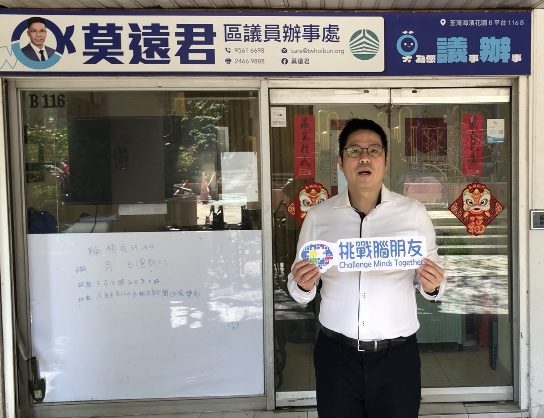
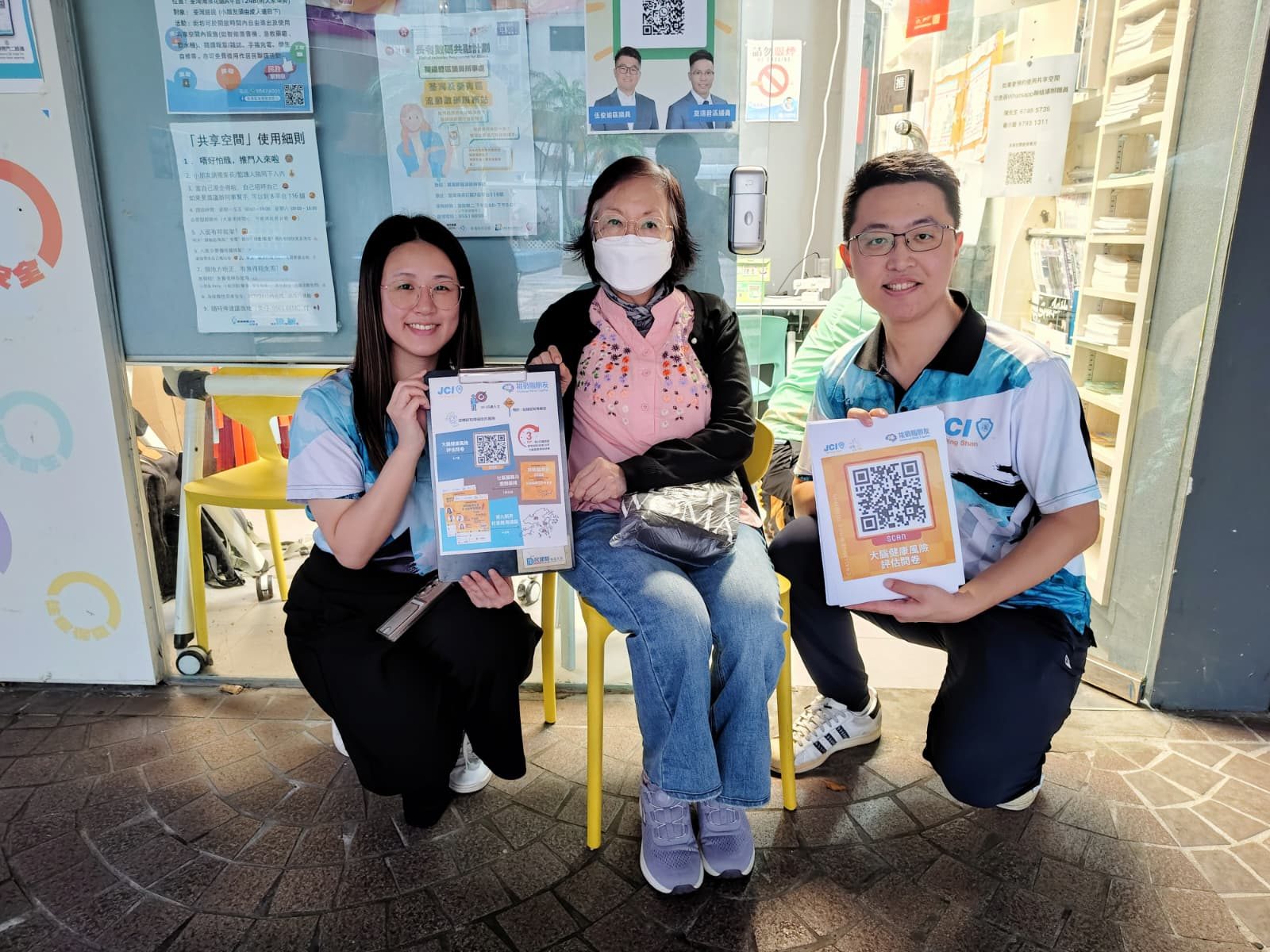
(1) Street interviews and questionnaires in June, New Territories. On 29 June, at Tsuen Wan Riviera Gardens and the office of District Councillor 莫遠君, board members distributed online and paper brain-health questionnaires and collected about 70 replies. The replies help the chapter read Hong Kong people’s brain health and the main risks of cognitive decline. Face-to-face conversation also put the message of early prevention, and of reversing risk through daily habits, into the neighbourhood.

(2) 「社區服務日」 and closing ceremony in July.

On 19 July, at Yaumati Catholic Primary School (Hoi Wang Road), about 100 people closed 「挑戰腦朋友2026」.
In the morning the chapter released two years of brain-care survey results and observations.
A forum heard Professor 莫仲棠 and Professor 張艷蕾 of The Chinese University of Hong Kong, and Yau Tsim Mong District Councillor 關煒曦.
They discussed dementia in Hong Kong, the challenges, and possible policy.
Six booths from partner organisations then took the 14 key risks and, through games and experience, showed how brain care fits into an ordinary day.
(3) What the 2026 survey found. The most common risks among all respondents were lack of exercise (60.91 per cent), poor cholesterol control (48.44 per cent) and vision problems (31.39 per cent). In the CAIDE high-risk group, poor blood-pressure control and lack of exercise both reached 80 per cent, and poor cholesterol control 76.67 per cent. 「三高」 plus a sedentary life are already an important threat to brain health in young and middle adulthood. Treating cognitive decline as a problem only of old age means missing the best time to prevent it.
Projects
 Challenge Minds Together |